Mike Oldfield’s Tubular Bells: much more than the music for The Exorcist and Bassie & Adriaan
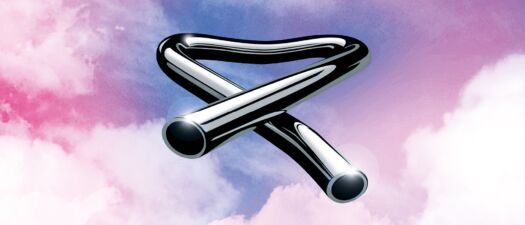
When thinking of Tubular Bells, one likely immediately hears that chilling opening melody. For many, it is inextricably linked to the horror film The Exorcist, or perhaps even to the chase scenes in the Dutch television series Bassie & Adriaan. However, it was not created with that intention. In 1972, Mike Oldfield was only nineteen years old. While his peers headed to the pub, shy Mike locked himself in his bedroom with a rented tape recorder. He had a vision: to create a symphonic piece of music in which he would play virtually all the instruments himself: from guitars and organs to the iconic tubular bells from which the album derives its name. In total, he played no fewer than twenty instruments himself!
Richard Branson
The result was a unique mix of rock, classical, and folk. But there was one problem: not a single record label dared to take it on. ‘Where are the lyrics? Where is the drummer?’ they wondered. Until he ran into Richard Branson. Branson, who was then still at the beginning of his empire, was so impressed that he founded the label Virgin Records. Tubular Bells became the label’s very first release.
Layered masterpiece
What makes Tubular Bells still so special after fifty years? It’s the layering. Oldfield stacked track after track on top of one another, a painstaking task in a time when computers did not yet exist. The climax of ‘Part One’ is legendary: a ‘Master of Ceremonies’ introduces the instruments one by one, until the tubular bells ring in the finale with a majestic crash. It is a moment that gives you goosebumps with every listen. A salient detail: during the recordings, Oldfield struck the bells so hard that he bent the hammers. That raw sound is exactly what you hear on the final record!
The Exorcist
Although the album was initially a modest success, everything changed when director William Friedkin used the opening notes for his film The Exorcist. Suddenly, the whole world wanted to know who that mysterious musician was. Tubular Bells grew into one of the best-selling instrumental albums of all time and paved the way for genres such as New Age and progressive rock.
Bentley
Although the success of Tubular Bells made Mike Oldfield a global star, he was anything but ready for the spotlight. The nineteen-year-old musician was extremely reclusive and suffered from severe panic attacks. The idea of performing his complex masterpiece live in front of an audience frightened him so much that he initially refused to perform. It was only when label boss Richard Branson gifted him his own Bentley in a last-ditch attempt to convince him that Oldfield relented. The result was a legendary debut concert at the Queen Elizabeth Hall.
Multiple parts
Anyone who listens to the entire album will discover that Tubular Bells is much more than just that famous horror intro. The first part (Part One) builds the tension toward the iconic climax with the tubular bells. In the second part (Part Two), the landscape becomes dreamier and calmer, until halfway through you are suddenly startled by the ‘Caveman’: a strange fragment featuring raw, growling voices. The musical adventure ends surprisingly cheerfully with the ‘Sailor’s Hornpipe’, a catchy sea shanty. That mix of chilling tension, dreamy calm, and the relative lightheartedness at the end makes the album still unique after all these years.
On Tuesday, September 8, attend ‘The Best of Mike Oldfield’s Tubular Bells I, II and III’ at Muziekgebouw Eindhoven. Oldfield’s regular musical partner, Robin A. Smith, performs the complete first part together with a band of top musicians, supplemented by extended sections from Part Two and Part Three. The worldwide hit single ‘Moonlight Shadow’ is also included!