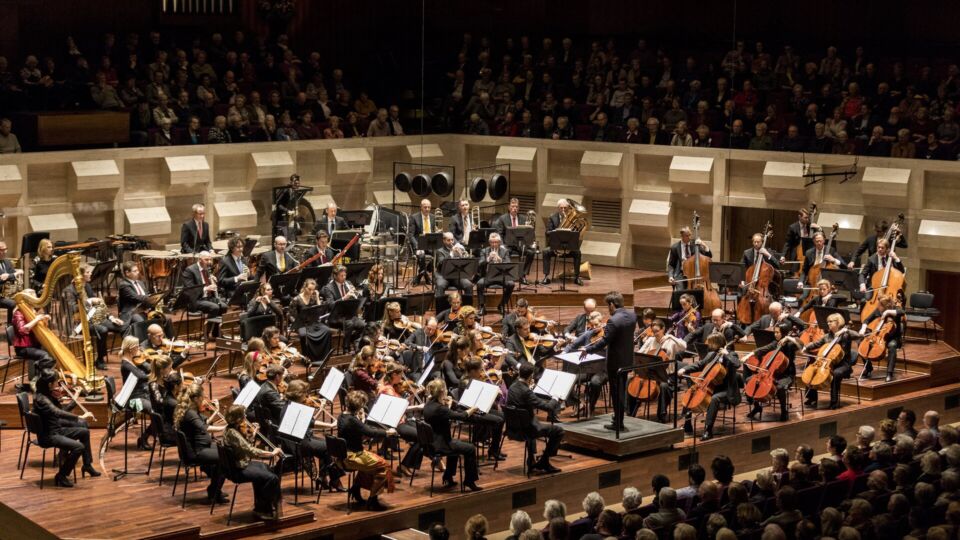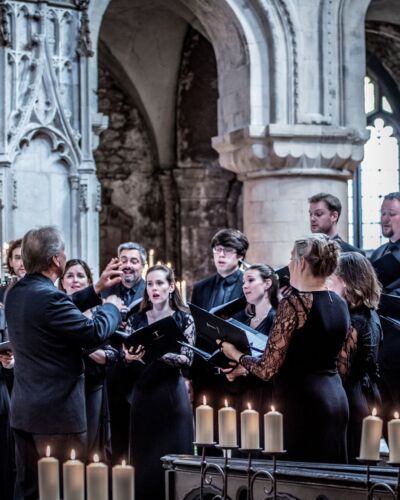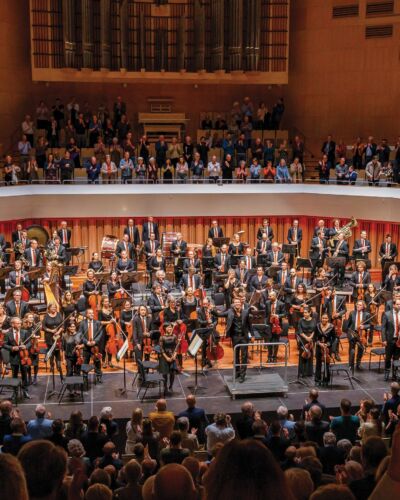
It does not happen often that a classical piece of music enters the Top 40. Yet it did happen with the opening chorus of Carmina Burana: in 1992 it reached the fifth position in the national charts. That piece, O Fortuna, is only a foretaste of what an exuberant, radiant work for choir, soloists and orchestra this is. For his Carmina Burana of 1937, Carl Orff used medieval texts by wandering students and wayward clergymen. The theme is the wheel of fortune, resulting in an ode to lust, love, wine, abundance and gambling.
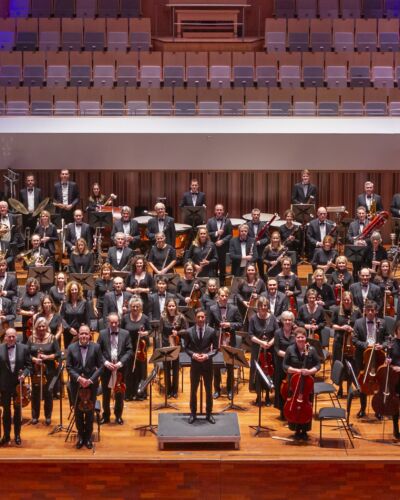
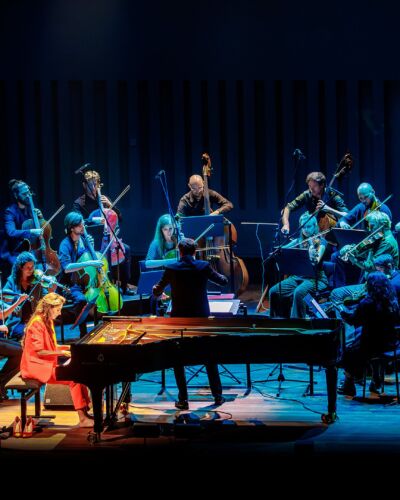
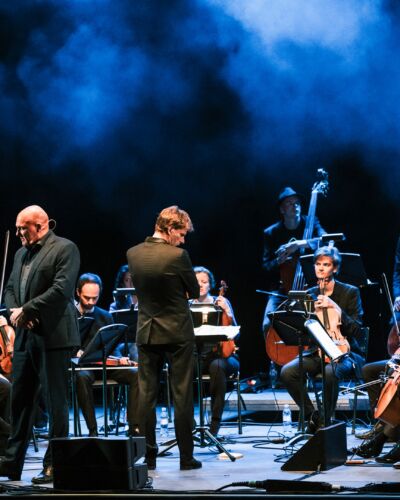
The contrast with Sibelius’ The Swan of Tuonela could hardly be greater. The Finnish Romantic Sibelius based this work on a myth from the Kalevala, Finland’s great national epic. Tuonela is the Finnish realm of the dead. According to the stories, it is surrounded by a wide river of black water and a swift current, ‘on which the Swan of Tuonela glides, majestic and singing’. Sibelius plunges deep into this dark subject, led by the cor anglais. Tonight the Rotterdam Philharmonic Orchestra performs under the baton of the Ukrainian conductor Dalia Stasevska. The National Choir of Ukraine ‘Dumka’ takes care of the mighty choral parts.